REG News
Hyderabad: With the El Niño effect raising concerns over rainfall and water availability in the coming summer, Hyderabad is preparing to reduce the use of drinking water for construction and other non-potable purposes.
The Hyderabad Metropolitan Water Supply and Sewerage Board (HMWSSB) plans to launch a treated water supply initiative from November 1, targeting 100 million litres per day (MLD) in the first phase to ease pressure on drinking water resources and groundwater over the next eight months.
The plan comes amid concerns over water reserves in the Singur and Manjeera reservoirs. Following Chief Minister A Revanth Reddy's directions, HMWSSB Managing Director Ashok Reddy held a meeting with representatives of CREDAI, NAREDCO and TBF. Construction industry representatives assured the Board of their cooperation.
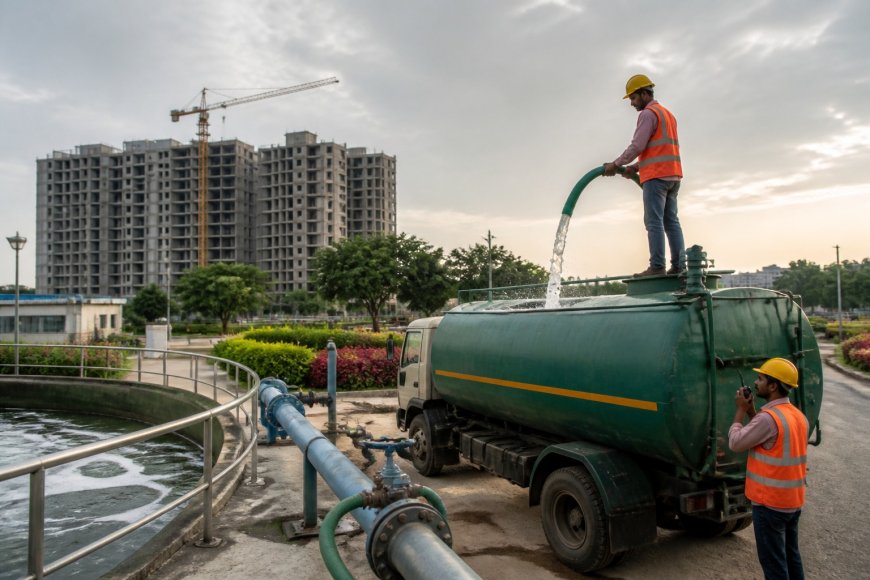
Under the proposed Dial-A-Green Tanker initiative, treated wastewater will be supplied to construction sites, industries, parks, green belts and landscaping projects.
The Water Board is finalising guidelines covering availability, quality standards, transportation and pricing. It has also warned that treated water supplied for construction must meet prescribed quality standards and that action will be taken against suppliers violating the norms.
A dedicated Green Water Tanker digital platform is being developed to connect suppliers, tanker operators, construction companies and other consumers. Expected to be ready within seven to 10 days, it will facilitate online bookings and tanker tracking while helping match demand with treated water available at nearby sewage treatment plants (STPs).
Also Read: Hyderabad Water Crisis: Water-Saving Tips for Apartments & Gated Communities
Surplus Water Usage
The HMWSSB is also looking to utilise surplus water from private STPs operated by gated communities and apartment complexes. Of the 51 private STPs registered so far, around 1.5 MLD of surplus treated water is estimated to be available daily.
Eligible facilities could also be used as temporary water-filling points, subject to infrastructure and quality requirements, reducing tanker travel distances and costs.
To make treated water economically viable, the Board is examining pricing based on water quantity, tanker capacity, transportation distance and supply costs. Direct pipeline connections between STPs and major users, including construction projects, gated communities, golf courses and parks, are also being explored. An existing pipeline supplying treated water to the Botanical Garden could serve as a model for other locations.
The HMWSSB has called on construction industry associations to consult their members and submit details of daily water requirements, supply difficulties, quality concerns and technical needs. The Board will hold another meeting to finalise supply arrangements, pricing and implementation.
It is also coordinating with GHMC, HMDA and municipal corporations to promote treated water use for parks, road medians and green belts, reserving drinking water primarily for essential domestic needs.
Also Read: Buying a Luxury Home? Check Wastewater Management, Not Just Amenities